
What to Expect When Your Body Starts Changing From Training
Getting stronger, feeling different and looking different don’t always happen at the same time.
Here’s what you might notice, what it means and when to ask for guidance.

Most fitness content shows you the beginning and the end.
The before photo.
The after photo.
Very little explains the experience in between.
You’re training consistently, but the scales haven’t moved.
Your clothes fit better, but your scan looks worse.
You’re no longer sore after every session, so you wonder whether you’re doing enough.
These experiences can be confusing when you don’t know what to expect.
Understanding them makes it easier to recognise progress, raise concerns and give your training enough time to work.
Your Body Doesn’t Follow a Fixed Calendar
There’s no universal schedule where everyone gets stronger in week two, loses a clothing size in week six and looks completely different by week twelve.
Your starting point, training history, nutrition, sleep, stress and health all influence the process.
So does how consistently you can train and recover.
The experiences below often overlap.
You might notice some,
miss others,
or revisit them when your program changes.
Your goal matters, too.
Someone building muscle may intentionally gain weight.
Someone improving cardiovascular fitness may become substantially fitter without looking noticeably different.
The first useful change may be something you can do, rather than something you can see.
1. You May Feel the Training Before You See the Results
In your first few sessions, or when returning after a break, everything can feel unfamiliar.
Your legs feel heavy on the stairs.
Sitting down after squats takes more consideration.
Movements that looked straightforward require concentration.
Muscle tenderness and stiffness after unfamiliar exercise are common.
Often called delayed-onset muscle soreness, or DOMS, this usually develops after training and can feel strongest over the following one to three days.
You may also feel tired after a session, even if you expected exercise to give you more energy immediately.
What matters is whether the amount of training allows you to recover and return.
You shouldn’t need to spend the days between sessions struggling through ordinary tasks.
Coach Tip:
Experiencing excessive DOMS often indicates that the load on your muscles was too high compared to what they are accustomed to.
It's important to note that you shouldn't aim to feel sore after every workout.
Consistent improvement can occur without intense DOMS.
If, two days after your leg training, you find yourself avoiding stairs or struggling to walk at all, please communicate this to your coach.
Share how you're feeling, including any discomfort experienced the following day.
We can modify the exercises, adjust the load, or change the volume of work to better suit your needs.
Remember, mild muscle tenderness that gradually improves is normal, but sharp pain, joint pain, or discomfort that worsens should not be ignored.
Don't assume that every new sensation should be pushed through.
And remember:
Soreness measures how sore you are. It doesn’t tell you how much progress you’ve made.
2. You May Get Stronger Before You Look Different
One of the first encouraging signs is often:
“That felt easier than last time.”
You feel steadier.
The exercise makes more sense.
You can complete another repetition or lift a heavier weight with control.
Early strength improvements partly reflect your nervous system becoming better at coordinating movements and producing force.
You don’t need a dramatic visible increase in muscle size for that to happen.
Outside the gym, you might notice that carrying shopping feels easier, getting off the floor takes less effort, or stairs leave you less breathless.
These changes are easy to overlook when you’re waiting for your appearance to change.
But if you can do something today that you couldn’t do a month ago, your body has changed in a meaningful way.
Coach Tip:
Record enough of your training to recognise improvement.
That might be the weight used, repetitions completed or the exercise variation you can now manage.
This is why we log everyone's programs and want the data tracked.
Your mirror cannot show you every adaptation.
3. Your Weight May Become More Confusing Before It Becomes More Informative
You start exercising to lose weight, make an effort with your food; step onto the scales, and the number is higher.
Understandably, that can feel discouraging.
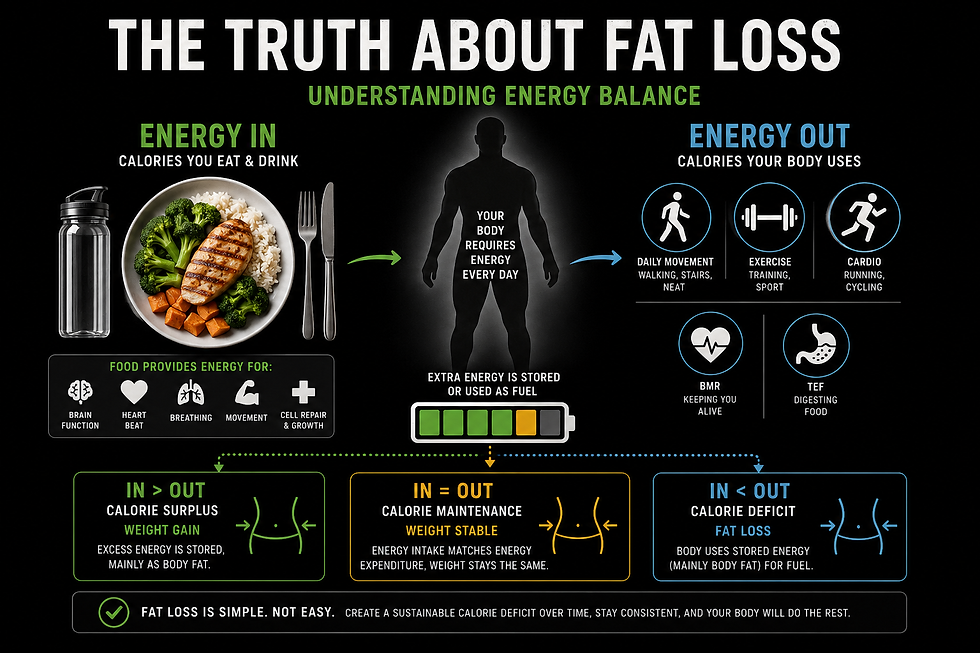
But body weight includes more than body fat.
Stored carbohydrate and its associated water, fluid shifts after unfamiliar training, food in your digestive system and menstrual-cycle changes can all influence the number.
Your muscles may also feel temporarily fuller after a session.
This “pump” isn’t the same as having built new muscle during that workout.
A short-term increase doesn’t automatically mean fat gain.
A quick drop doesn’t mean everything lost was fat.
Over longer periods, gaining muscle while losing fat can change your shape without a large change in total weight.
However, we shouldn’t explain every increase as “muscle gain”, either.
Coach Tip:
If weighing yourself supports your goal, compare measurements taken under similar conditions and look at the trend over several weeks.
Consider it alongside your waist measurement, clothing fit and training progress.
If a body composition scan seems to contradict those other signs, our article You Feel Leaner… So, Why Does Your Body Composition Scan Say You’ve Gone Backwards? explains how hydration and testing conditions affect the estimates.
The important point is that one result needs context before it deserves a conclusion.
4. Training May Start Feeling More Manageable
After a while, the same session may leave you less sore.
You recover your breathing sooner.
Your movements feel more natural.
You finish training and still have energy for your day.
This can prompt an unexpected concern:
“Am I still working hard enough?”
Less soreness doesn’t automatically mean less benefit.
Becoming accustomed to the work is part of adapting.
The question is whether your training still provides an appropriate challenge and supports your goal.
Your appetite may change, too.
You might feel hungrier as your activity increases, or notice little hunger immediately after training and more later.
Hunger alone cannot tell you whether you’re losing fat, building muscle or eating the right amount.
Coach Tip:
Look at the overall pattern.
Are you generally recovering between sessions?
Can you participate well?
Are your meals supporting your activity?
Constant hunger, persistent fatigue, poor sleep and declining performance deserve a conversation.
They shouldn’t become the standard you accept as “being committed”.
If you’re unsure where to start with food and daily habits, our Nutrition Coaching: The Foundation Phase explains the simple foundations we prioritise: protein, water and daily movement.
These give you something practical to focus on while you and your coach assess how your body is responding.
5. Your Clothes May Fit Differently Before You Notice in the Mirror
Because you see yourself every day, gradual changes can be difficult to spot.
Sometimes a familiar waistband tells you first.
A shirt sits differently across your shoulders.
Someone else notices something you haven’t recognised yet.
If you’re losing body fat, the area you most want to change may also be slower to show a difference.
You cannot choose where fat comes off first, and there isn’t a reliable order that everyone follows.
Feeling “bigger” can be confusing, too.
Muscles feeling full after training, abdominal bloating and measurements increasing over several weeks are different observations.
They shouldn’t all receive the same explanation.
Coach Tip:
Compare over a useful period, rather than scrutinising yourself daily.
As your Coach, we recommend the following to pick up on what is happening:
Get a BIA Scan under similar conditions 4, 8, or 12 weeks apart.
Measure your circumferences under similar conditions, at the same frequency as your scans.
Take progress photos of yourself under similar circumstances either weekly or at least every retest.
Track your training performance each session, including your readiness and the session difficulty.
The same item of clothing, occasional waist measurements, or photos taken several weeks apart can provide valuable perspective on your progress.
Choose the methods that work best for you; taking photos and weighing yourself frequently are not mandatory.
Over the years, we have helped many members recognise that they are still on track even when a scan indicates no improvement. Often, they are making strength gains in their training, and their photos show them looking leaner.
If you have any concerns, please inform your coach about what changed and when it occurred.
This information will give us something specific to investigate.
6. Progress Will Often Become Less Obvious
Early improvements can be rewarding because so much is new.
Later, another small improvement may require more time and consistent practice.
A difficult session or an unchanged measurement doesn’t establish a plateau.
But if several relevant measures remain unchanged over a meaningful period, it’s worth reviewing the plan.
That review depends on your goal.
For fat loss, a smaller body generally needs less energy, so an approach that initially produced weight loss may eventually maintain your weight instead.
For strength or muscle development, we might review the training challenge, consistency, nutrition and recovery.
Our article The 5 Principles Behind Every Effective Training Program explains how those pieces work together.
Coach Tip:
Review with your coach before you overhaul.
Slower progress is a reason to assess what’s happening, rather than automatically training harder or eating less.
So, How Long Should You Give It?
You may notice changes in confidence, coordination and exercise performance within your first few weeks.
Visible changes usually need a longer view, and their timing varies considerably.
There is no honest deadline by which everyone should look different.
Instead, agree with your coach on what you’re working towards, how you’ll assess it and when you’ll review it.
At that review, ask:
Have I followed the plan consistently enough to assess it?
Are the measures relevant to my goal improving?
Am I recovering well enough to keep going?
This gives you a way to be patient without ignoring a plan that needs adjusting.
How Do You Know Whether It’s Working?
Choose a few signs that match your goal.
Your goal | Useful signs of progress |
Become stronger | More weight or repetitions with comparable technique and effort |
Improve fitness | More work at a similar effort, or familiar work feeling easier |
Lose body fat | Weight and waist trends over time, considered alongside other observations |
Build muscle | Measurements and photos over time, supported by training and body-weight trends |
Make everyday life easier | Daily tasks feeling more manageable, with improved movement and confidence |
You don’t need to track everything.
You need enough information to judge whether your approach is helping.
Feeling better matters.
Objective measurements matter.
Neither needs to carry the entire story alone.
What Shouldn’t Be Dismissed as “Part of the Process”?
Some adjustment is expected.
Feeling progressively worse needs attention.
Speak with your coach if soreness repeatedly disrupts daily life, your performance keeps declining, or fatigue and hunger become difficult to manage.
Persistent or worsening pain, recurrent dizziness or unexplained changes in your health warrant medical advice.
You don’t need to wait until something becomes severe before mentioning it.
You Don’t Have to Interpret Every Change Yourself
At The Training Ground, we want to hear what you’re noticing between sessions.
“My clothes fit differently.”
“I’m recovering faster.”
“I’m always tired.”
“I feel stronger, but my weight hasn’t changed.”
Those observations help us understand how the plan is working for you.
Your body may become more capable before it looks different.
Some measurements will fluctuate.
Some changes will need more time, and others will need an adjustment.
The aim is to understand enough of the process that you can recognise progress and ask for help when something doesn’t feel right.
You don’t have to wait for an after photo to acknowledge that your body is already doing more than it could before.


Comments